Dhikala Old Forest Rest House
How the current Dhikala old forest rest house booking should be understood
A Dhikala FRH booking is the most searched forest stay in Corbett because it combines the strongest name recognition with the deepest reserve feel. But the important part is not the fame. The important part is the booking structure behind it. Current official Corbett process pages show that night-stay booking is handled through the reserve's permit flow, not through a hotel-style room engine. Reservations currently open up to 45 days in advance, new slots open every Monday at 10:00 AM, named traveller IDs must match exactly, and the booking includes two jeep safaris while driver and guide charges are handled separately. If you understand those rules early, Dhikala becomes much easier to plan.
The current official pricing page adds more context by listing Dhangarhi as the Dhikala entry side and by making a sharp distinction between Dhikala canter access and Dhikala night stay. It also explicitly notes that Dhikala does not offer a normal day jeep safari permit. That means you should not compare Dhikala to ordinary zone bookings on the same terms. It is a separate branch of Corbett planning, with a different room-and-permit logic and a different travel payoff.
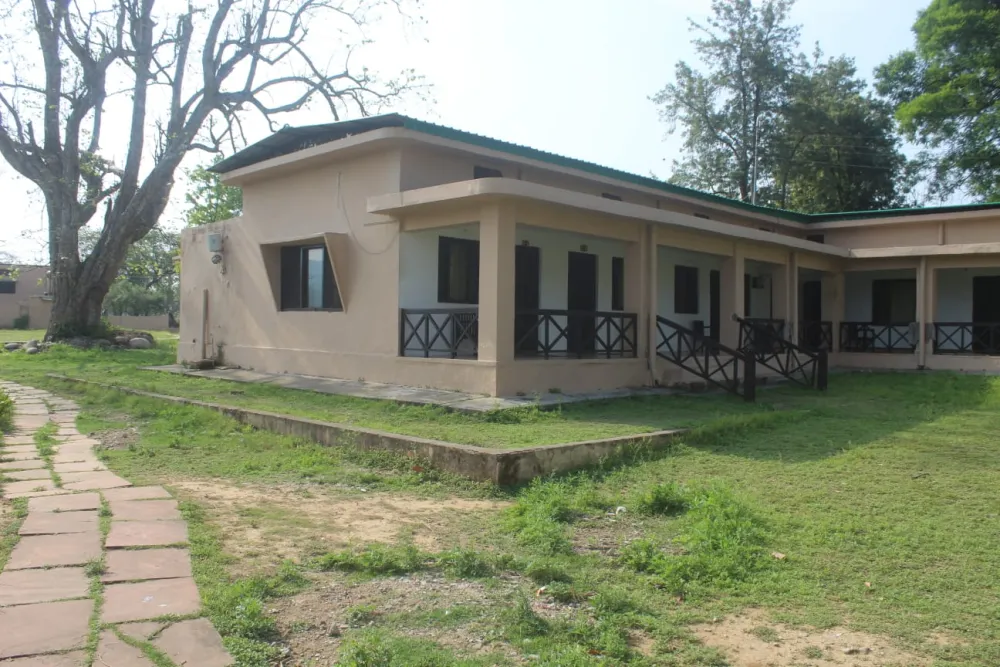
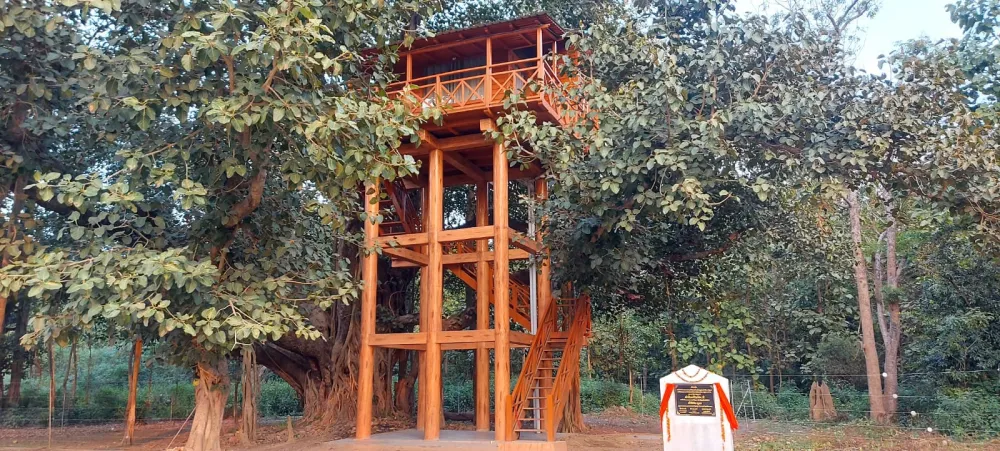
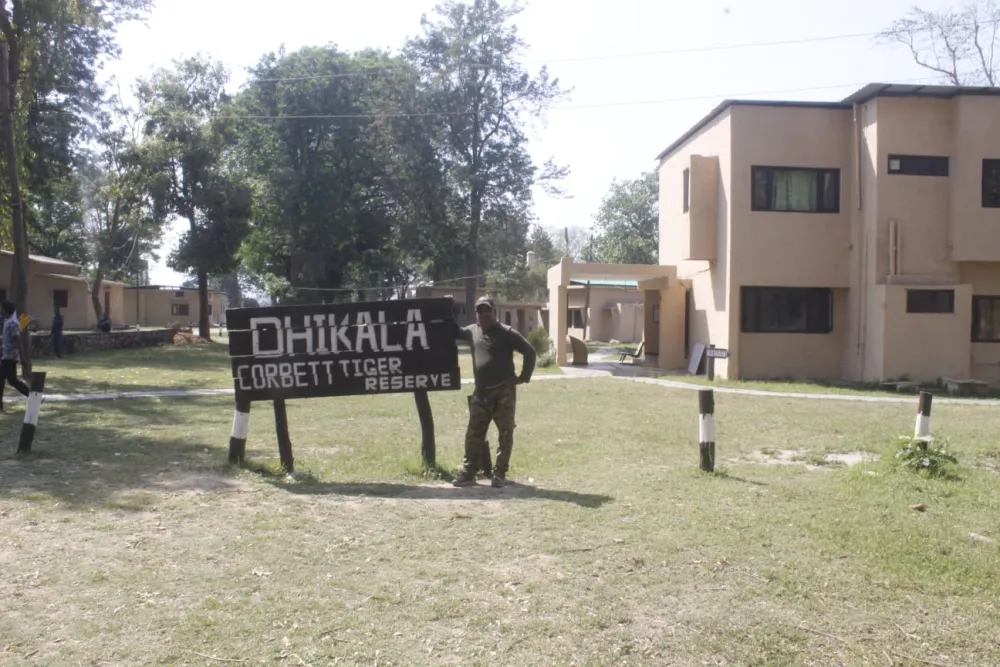
Official Dhikala zone information is also useful because it explains what the booking is buying beyond the permit. The page currently describes a scenic drive from Dhangarhi through Sal forest, grasslands, and river channels, old and new architecture within the campus, restaurant and canteen services, a library, walking tracks, and wildlife movie shows. That description matters because it shows Dhikala is not just a bed in the forest. The Dhikala old forest rest house identity is tied to this legacy campus, and the stay is the reserve's most fully developed public night-stay complex, built around the idea that guests should spend meaningful time in the landscape rather than only passing through it.
That still does not make Dhikala a luxury property. The room categories exist to support the reserve experience, not to imitate a private resort. This is where many travellers make the wrong comparison. If you judge Dhikala only by room polish, you will miss the point of the product. If you judge it by access to landscape, wildlife rhythm, reserve history, and the feeling of being present inside Corbett after the day visitors have left, its value becomes much clearer.
What the current official pages imply about Dhikala old forest rest house room choice
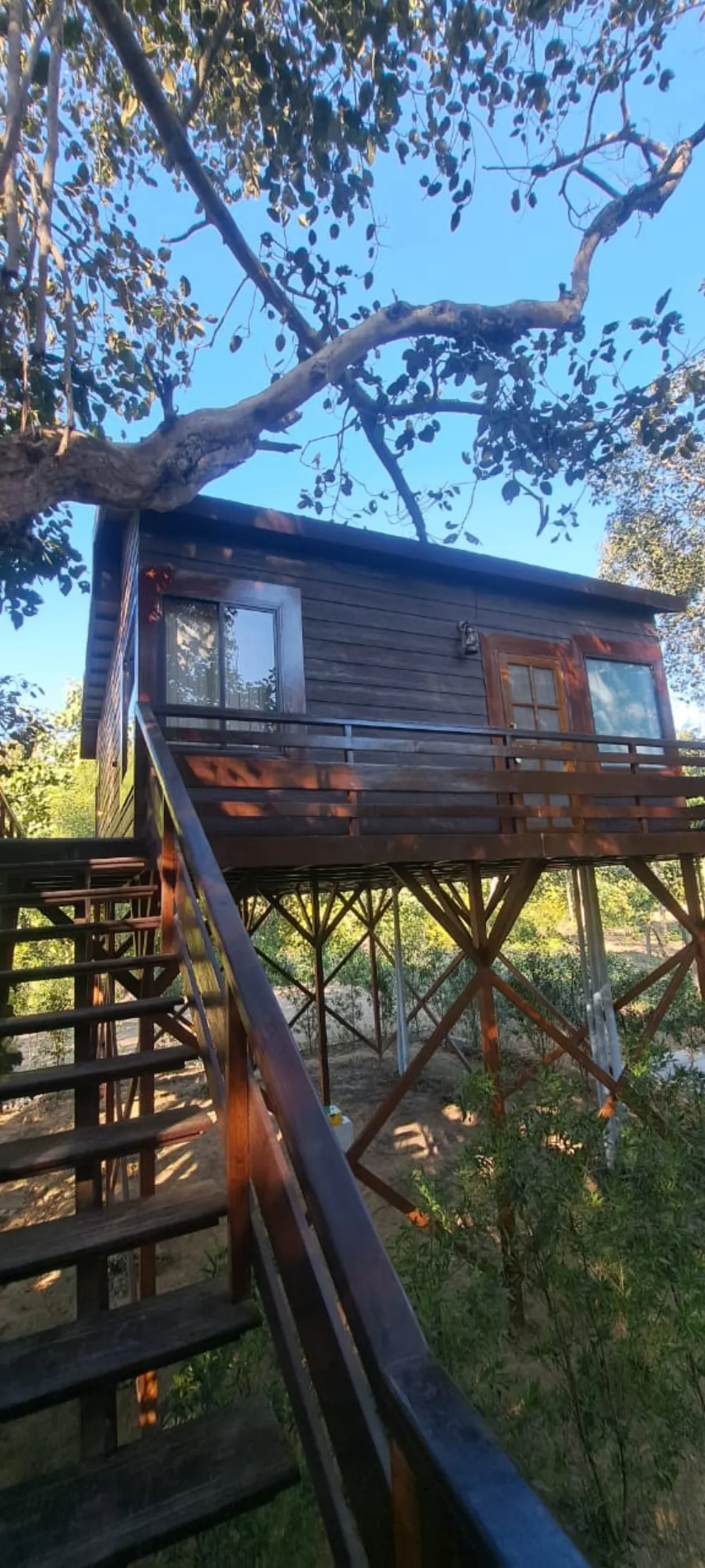
The official Dhikala zone page currently mentions cabins, hutments, annexes, and log huts, and it emphasizes the mix of old and new architecture. The practical conclusion is that Dhikala room selection should be treated as a category decision rather than a hotel "best room wins" contest. Some travellers want the old-world feel. Some want the simpler logic of newer blocks. Some want the least expensive workable stay simply to maximize reserve time. The right room is the one that supports the trip rather than distracts from it.
For example, a photographer or serious wildlife enthusiast may value campus location, certainty of being inside Dhikala, and budget discipline far more than any room-style distinction. A family with children or older parents may prefer a more predictable layout or easier access within the complex. A couple may care more about atmosphere than square footage. None of these approaches is wrong. The mistake is assuming the most expensive or most discussed category is automatically the best fit. In reserve stays, appropriateness usually matters more than prestige.
There is another subtle booking advantage in thinking this way. Because the current official portal shows only what is actually available, travellers who are flexible on room category but fixed on trip intent often do better than travellers who are rigid on one idealized room name. If the real goal is "one full Dhikala night," some flexibility on category can be a strength. If the real goal is "only that exact room type," the trip can become much harder to land.